
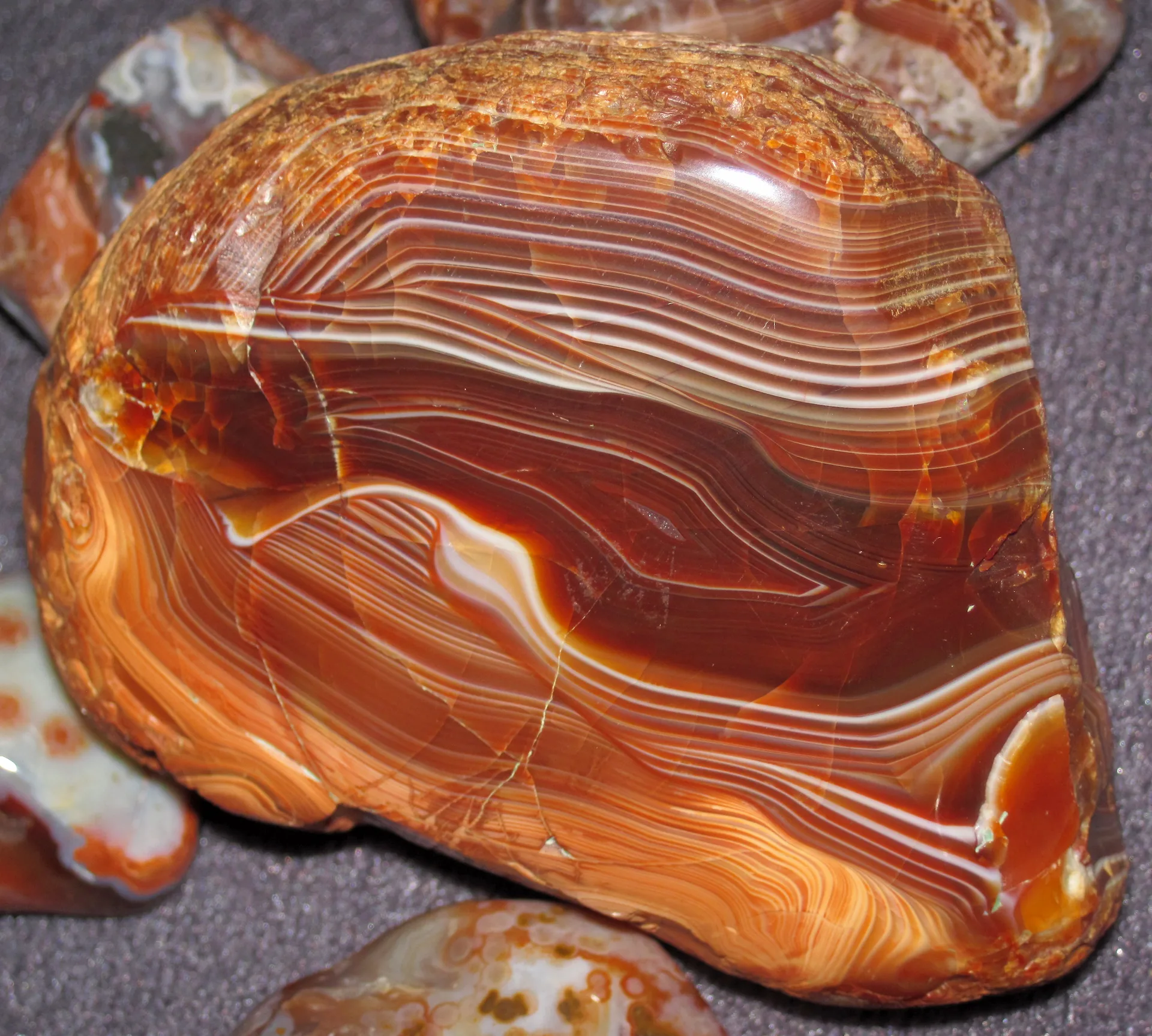
Lake Superior agates are old. Between one and two billion years old, formed when silica-rich water seeped into gas pockets in ancient lava flows and crystallized over millennia. The iron in the rock oxidized to create the red, orange, and yellow banding that makes a polished agate look like it is lit from inside.
They were carried south by glaciers during the last ice age and deposited across the upper Midwest. The lake's wave action has been sorting and tumbling them ever since. The North Shore beaches are where they end up.
What You Are Looking For
Lake Superior agates have a few identifying features:
Color: Red, orange, and rust tones are the most common. The iron banding ranges from deep burgundy to pale yellow. Freshly tumbled agates on a wet beach show their color well. Dry agates can look like any other gray rock.
Translucency: Hold a suspected agate up to direct sunlight. If it is the real thing, light passes through the banding. This is the fastest field test.
Waxy surface: Agates have a waxy, almost greasy sheen when wet. Different from the matte surface of basalt or the sparkle of quartz.
Weight: Agates are dense. Heavier than they look for their size.
The banding is what separates an agate from other reddish rocks. The layers run parallel to the outer surface. A broken or tumbled agate exposes the interior pattern. Once you have seen it, it is recognizable.
Where to Look
The gravel beaches along the North Shore are the productive spots. River mouths are especially good — rivers continuously wash new material down from upstream and deposit it on the beach. After a storm, wave action overturns the gravel and brings fresh material to the surface.
Near Overlook Hus: The Onion River mouth near the LeVeaux and Oberg trailhead, 4.8 miles northeast, has a gravel beach. Temperance River mouth is 6 miles southwest. Both are worth checking after heavy weather.
Grand Marais harbor: The rocky shoreline around the harbor and Artist Point has been picked over by tourists but still produces finds. The breakwater area is worth a slow walk.
Two Island River and Cross River: Both within 20 minutes and accessible directly off Highway 61. Small gravel beaches at the river mouths.
After storms: Timing matters more than location. A northeast wind that runs a long fetch across the lake turns over gravel that hasn't been touched in months. The morning after a storm is the best time to hunt any beach on the shore.
How to Hunt
Walk slowly. Most people move too fast. Get low — a crouching walk or kneeling on wet gravel puts your eyes closer to the material.
Wet is better than dry. Carry a small water bottle and wet suspicious rocks. Color and translucency show immediately on a wet surface.
Focus on areas where the gravel has been recently overturned — the freshest material at the water's edge, not the piled dry gravel above the wave line.
Sort by shape and weight first. Round, dense rocks in the one to three inch range deserve a closer look. Most will be chert or jasper. A few will be agates.
Most finds on a casual beach walk are small — thumbnail size or smaller. A two-inch agate is a good day. A three-inch agate with clear banding is worth photographing and showing around.
Other Rocks Worth Collecting
Lake Superior agates get the most attention, but the North Shore beaches hold other material worth finding.
Pink rhyolite: The pink and maroon patterned rock that is common on North Shore beaches. Not an agate, but visually distinctive and satisfying to collect.
Basalt: The dark gray and black bedrock of the North Shore. Most of the pebbles on the beach are basalt. Tumbled smooth, it is the background material.
Thomsonite: A rare mineral found almost exclusively near Grand Marais. White with green or pink dots or rings. Collectors travel specifically to find it.
Greenstone (chlorastrolite): The official state gem of Michigan, found on Isle Royale and occasionally on the Minnesota shore. Dark green, turtle-shell pattern. Rare and worth knowing.
Bringing Kids
Agate hunting turns a beach walk that a child might otherwise lose interest in after ten minutes into something that can hold attention for hours. The combination of sorting through rocks, the reward of finding something, and the education of learning what each rock is makes it one of the more durable outdoor activities for kids on the North Shore.
Bring a small bag or bucket. Rinse finds in the lake before packing them. Most agates look better polished, and a rock tumbler is a reasonable investment after a trip that produces a collection.
After the Trip
Finds can be polished at home with a rock tumbler. Cold-rolled agates with significant banding are worth having cut and polished by a lapidary if the stone is exceptional. Several shops in Grand Marais and Duluth cut and sell local stones and can look at what you found.
The Gitchi-Gami State Trail runs directly across the road from Overlook Hus along the lake. A morning walk on the trail to the nearest river mouth and back is a reasonable way to start any day on the North Shore, regardless of what you find.
Overlook Hus is the right base for a day on the shore. Check availability and book directly.